Application security by Qubitron Labs
The guardian of your software: web, mobile and desktop apps, APIs and smart contracts.
AI can take your app apart without the source code. We find what it sees, then lock it down.
We test and harden web, mobile, desktop and smart-contract applications, with evidence of what an attacker could extract and the fixes that stop them.
We only test applications you own or are explicitly authorized to test.
What we do
Five services. One question: what can an attacker take?
- 01Start hereAI Reverse-Engineering Exposure AuditWe point AI-assisted reverse engineering tools at your shipped app and report what they recover: logic, endpoints, secrets, data shapes and how much of the product could be rebuilt.WebMobileDesktop and ElectronLearn more
- 02Penetration Testing (VAPT)Vulnerability assessment and penetration testing of your web application and its APIs: authentication, authorization, injection, business logic and the OWASP Top 10, verified by hand.Web applicationsREST and GraphQL APIsAuthentication and SSOLearn more
- 03Mobile App Security TestingStatic and dynamic security testing of Android and iOS apps, per platform: reverse engineering of the build, local data storage, network security, authentication and the backend it talks to.Android (APK and AAB)iOS (IPA)React Native and FlutterLearn more
- 04App HardeningWe harden your web, mobile or desktop build: obfuscation, moving sensitive logic server-side, integrity checks, anti-tamper and anti-debugging, applied by our engineers and verified against the same tools attackers use.Web bundlesAndroid and iOSDesktop and ElectronLearn more
- 05Smart Contract AuditManual and tool-assisted security review of Solidity smart contracts on Ethereum and EVM-compatible chains: access control, reentrancy, arithmetic, oracle and economic risks, with a public-ready report.SolidityEVM-compatible chainsUpgradeable proxiesLearn more
- Not sure where to start?Thirty minutes with an engineer.Tell us what you ship and what worries you. We'll say what we'd look at first, and whether an audit is even the right next step.Book a free exposure call
Already happening in public
Not a forecast. It's on the record.
Creators running AI reverse-engineering tools against well-known apps, on camera, in October 2026. Their words, their results, linked to the source. Hover a card to read the quote.
 Video“4 minutes. That's how long it took Claude to take apart Obsidian search with no source code and rebuild it so exactly that it matched the original on 4,915 tests.”Obsidiansearch rebuilt with REA, matched the original on 4,915 testsHyperautomation LabsYouTube · 10 Oct 2026 (opens in a new tab)
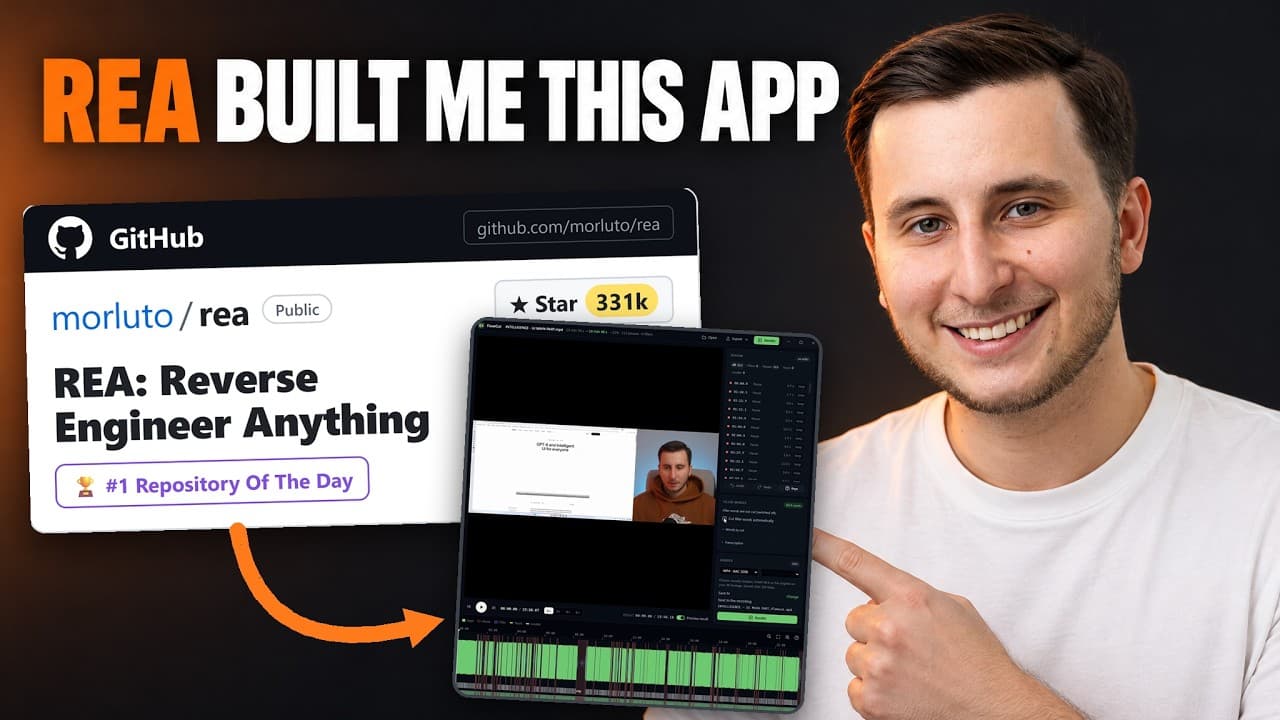 Video“It cuts in the same places as the original, all 123 cuts on a real recording matched”TimeBoltpaid app copied with REA, all 123 cuts matchedMaksims SicsYouTube · 20 Oct 2026 (opens in a new tab)
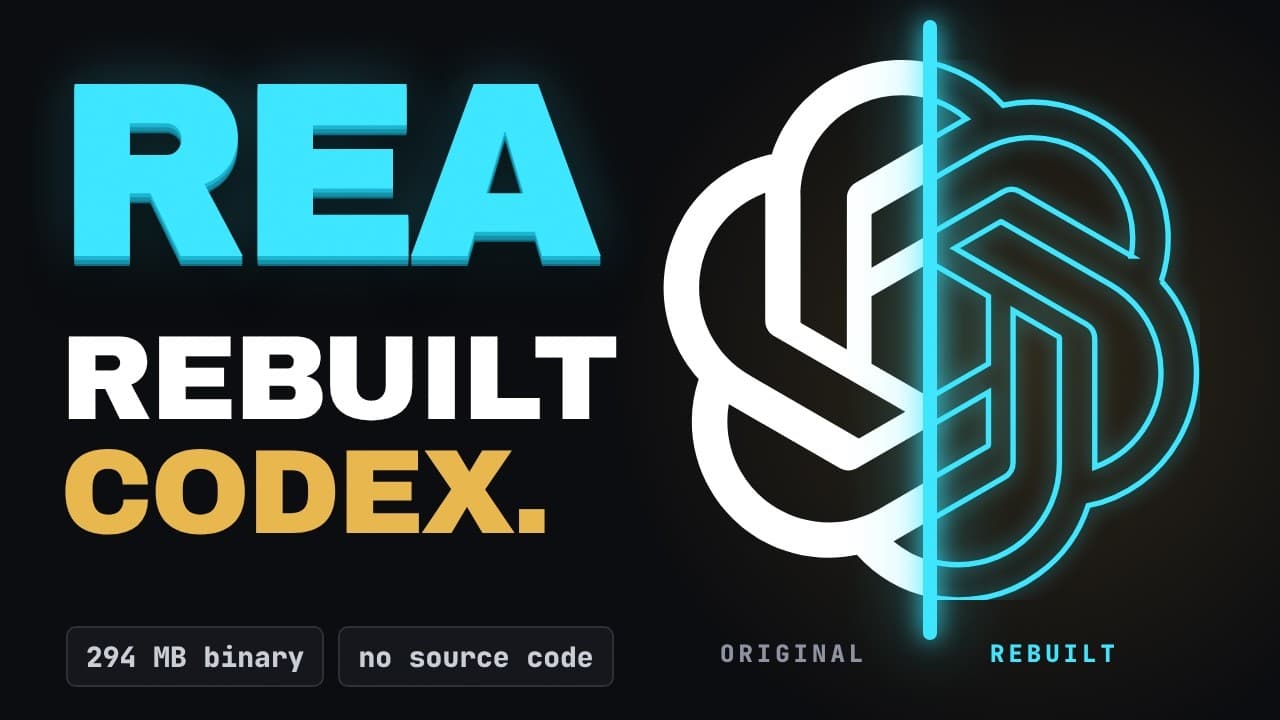 Video“On the hard test, the copy jumped from 75% to 98.5% and across both tests, it passed 416 of 422 checks.”CodexOpenAI's engine copied with REA, 416 of 422 checks passedSoftsWebYouTube · 15 Oct 2026 (opens in a new tab)
 Video“We didn't clone like all of the exact UI and the design elements. We cloned the functionality.”Loomhow it works copied with REA, not its lookNate HerkYouTube · 13 Oct 2026 (opens in a new tab)
 Video“The agent made eight claims. Seven were exactly right. One was partly right.”Red AlertEA game's code read blind with REA, 7 of 8 claims rightCoding Crash CoursesYouTube · 13 Oct 2026 (opens in a new tab)
 Video“the one on the left is the recreation, and the one on the right is the actual application. It's really, really close.”GNOMECalculator recreated from its binary with REA in 28 minLow LevelYouTube · 16 Oct 2026 (opens in a new tab)
 Video“And as you guys could see here, it is virtually the same thing.”PreviewApple's app copied with REA, though plain Claude was firstNick SaraevYouTube · 10 Oct 2026 (opens in a new tab)
 Video“So, 200 plus 10%, let's see if it gets it right. Yes, it did get it right, 220.”CalculatorApple's hidden 200 + 10% = 220 rule, copied with REAAutomate with MarcYouTube · 15 Oct 2026 (opens in a new tab)
 Video“The analysis took about 4 minutes and Claude code wrote the first working version in about three more.”ShareXfeature mapped with REA and rebuilt in 7 minutesWiredeepYouTube · 12 Oct 2026 (opens in a new tab)
 Video“if I were to point out a winner, I would honestly do the one that did not have access to REA.”No REAplain Claude copied a feature in 5 min; REA took 27Konrad LawaetzYouTube · 11 Oct 2026 (opens in a new tab)
Your app ships its own blueprint.
Scroll to harden one file. Names and values turn to noise; the app runs the same. An audit finds what this file gives away. Hardening is what changes it.
What the exposure audit covers// Sent to every visitor's browserconst API_HOST = "https://api.acme-app.com/v2";const ADMIN_EXPORT = "/internal/admin/export"; export function quote(plan, seats) { const base = PRICE_TABLE[plan]; const discount = seats > 50 ? 0.2 : 0; return base * seats * (1 - discount);} export const canExport = (user) => user.plan === "enterprise";- Scripts and binaries
- Every rule computed on the client.
- Network calls
- Endpoints and the shape of your data.
- Structure
- How the product fits together.
- Source maps and symbols
- If public, your original code.
Why you should worry
An AI agent can now take your app apart without the source code.
REA, a free toolkit that went viral in October 2026, lets coding agents rebuild an app from what it ships: web bundles, mobile packages, desktop binaries.
What it took you
- Months or years of work
- A team and a budget
- Every pricing rule, flow and edge case you got right
What a copy needs now
- Your live app
- One AI agent
- 0 lines of your source code
- 01
Your head start
They study your working product instead of designing one.
- 02
Your secrets
Pricing rules, limits, keys and endpoints ship in your client.
- 03
Your market
A copy can launch cheaper, under another name, far faster.
What we stand guard over
Whatever you ship, someone can now read it with AI.
- 01Web appsWhat AI readsBundles, source maps, API calls and every rule computed in the browser.Exposure audit, pen test, hardening
- 02Mobile appsWhat AI readsThe APK or IPA itself: decompiled logic, hardcoded keys, local data, the API behind it.Mobile testing on real devices
- 03Desktop and ElectronWhat AI readsInstallers and app archives, licence checks, update channels, bundled secrets.Exposure audit, hardening
- 04APIsWhat AI readsEndpoints the client reveals, missing authorization, limits a script can skip.Penetration testing (VAPT)
- 05Smart contractsWhat AI readsPublic bytecode and state: access control, rounding, oracles, upgrade paths.Solidity and EVM audit
How it works
Scoped, tested, proven, fixed.
Scope and authorization
A short call to agree what is in scope, what is out, and when. You confirm in writing that you own or are authorized to test it.
We test
AI-assisted discovery across the build you ship, then manual verification of every finding. No false positives reach you.
Evidence-backed report
Each finding with severity, exact location, proof and a fix. Plus a plain-language summary for the people who sign things.
Fix and re-test
Your team fixes, or ours does. Then we re-run the same tooling and show what has changed.
What you get
Not a scanner dump. Findings you can act on the same day.
Every finding names where it lives, shows the evidence that proves it, says what it lets an attacker do, and how to fix it. A person confirms each one before it reaches you.
- Technical report, in priority order
- One-page summary for whoever signs off
- Evidence: decompiled excerpts, captured requests, extracted values
- Fix plan, then a re-test that marks each finding closed or open
Pricing rules and an admin export route are readable in the shipped bundle
- Where
- assets/pricing-4f2a1c.js, lines 2 to 8
- Evidence
const API_HOST = "https://api.acme-app.com/v2";const ADMIN_EXPORT = "/internal/admin/export";export function quote(plan, seats) { const base = PRICE_TABLE[plan]; const discount = seats > 50 ? 0.2 : 0; return base * seats * (1 - discount);- Impact
- Anyone can lift the volume-discount logic and call /internal/admin/export directly to test whether it checks authorization.
- Fix
- Move quote calculation server-side, return only the price. Put the export route behind a server-side role check and remove it from the client.
- After re-test
- Closed
Rules we don't bend
Guarding software is a position of trust. So we work in the open.
- 01
Authorization first
No testing without written permission from someone entitled to give it. We decline requests about other people's products.
- 02
AI-assisted, human-verified
We use the same AI tooling attackers use to cover ground fast. A person reproduces every finding before it is reported.
- 03
Evidence, not opinion
Each finding comes with the excerpt, request or value that proves it, so your team can check it for themselves.
- 04
Honest about limits
Testing finds issues; it can't prove their absence. Hardening raises the cost of copying; it can't make copying impossible.
From the blog
What changed this month, and what it means for your app.
- 4 min readREA after the hype: what AI reverse engineering can and can't take from your appREA passed 360,000 GitHub stars in October 2026. What it actually does, what developers found running it on their own apps, and what to change in yours.AI reverse engineeringREAApp hardening
- 3 min readYour frontend is leaking: source maps and API keys in shipped codeApple's App Store website and Claude Code both shipped source maps. Researchers keep finding live keys in bundles. How to check your own app in an afternoon.Source mapsSecretsWeb security
- 4 min readRepackaged apps in 2026: why a passing integrity check isn't proofA new trojan swaps real banking apps for patched copies and relays Play Integrity. What 2026's mobile threats mean for app teams, including India's new RBI app rules.Mobile securityAndroidIndia
Free exposure check
Not sure how exposed you are? Get a free exposure check.
Give us the public address of one application you own. We take a short, non-intrusive look at it the way an AI-assisted attacker would, and send you the top things we notice. No report, no obligation.
- Target: https://app.example.com (web, owner-confirmed)
- Shipped bundles: 14 scripts, 2 source maps public
- Readable logic: pricing tiers, trial length, seat discount
- In bundle: 1 analytics key, 1 internal hostname, /admin/export
- API surface from client: 23 endpoints, 2 without auth header
- Summary drafted. Recommend: source maps off, move pricing server-side
An illustration of the kind of summary you get. Not a real result.
How much does it cost?
It depends on what you ship: one web app with one API is a very different job from three platforms and partner integrations. We don't publish prices. Request a quote, we discuss scope and price on a short call, and you get a fixed price in writing before anything starts.
Do you need access to our source code?
Not for an exposure audit, a penetration test or a mobile test: we work from the build you ship, the way an attacker would. Hardening and smart contract audits do need the code, under a confidentiality agreement.
Can you look at a competitor's app for us?
No. We only test applications you own or are explicitly authorized to test, and we confirm that in writing before any work starts. See our rules of engagement.
Is the free exposure check really free?
Yes. It is a short, non-intrusive look at the public build of one application you own and a summary of the top things we notice. It is not an audit and does not come with a report. See the free exposure check.
We just need a report for a customer's security questionnaire. Is that you?
Yes. A penetration test comes with a technical report, an executive summary and a letter of attestation you can share. Tell us the deadline in the message.
Next step
Find out what your app gives away. Book a free exposure call.
Thirty minutes with an engineer, not a sales deck. Tell us what you ship; we tell you what we'd look at first and what an audit would involve.
We only test applications you own or are explicitly authorized to test.